

LB TA
TA
TABetter fitness results do not come from hard training alone—recovery matters just as much. This guide covers practical tools and habits, from sleep and mobility work to massage guns and sauna sessions. It also includes insights from experts in fitness, recovery, and health to help identify what is worth your time and money.
TA



12 on the lineup
The tool was not a gadget, it was a stopwatch. After my back injury put me in a wheelchair, I timed how far I could walk before the pain flared, and I would not add weights or hiking or running until that distance held steady for a while. It felt painfully slow when all I wanted was to lift again. That pacing is the reason I went from wheelchair to walking stick to weightlifting, hiking and now running, and lost 55 kilos along the way.
The recovery modality that has given me the best return is consistent, high-quality sleep. It's not as exciting as buying another recovery gadget, but once my training became genuinely heavy, I realized there was no tool that could compensate for consistently sleeping too little.
I aim for roughly 7-8 hours, and I protect the routine around it. One thing that's helped is replacing late-night phone use with reading for 20-30 minutes. It gives me a clear transition out of work mode and makes winding down much easier.
I noticed the difference most in heavy strength training. Better sleep meant I approached difficult sets with more focus, recovered more consistently between sessions, and didn't feel like I was dragging myself through warm-ups. That's become increasingly important as I've built my bench from 135 pounds to a 495-pound PR, alongside a 505-pound squat and 545-pound deadlift.
Massage guns, mobility work, and other modalities can certainly have a place, but I'd invest in the basics first. Sleep, sufficient calories and protein, hydration, and sensible programming provide the foundation those tools are supposed to support.
As a NASM Certified Nutrition Coach (CNC), ISSA Nutritionist, and CISSN, that's the recovery investment I'd recommend before buying something expensive.
The most effective recovery tool I've invested in is a quality massage gun. What makes it valuable for me is the convenience—I can use it for a few minutes after a workout or at the end of a long day without having to schedule a massage or make a separate trip somewhere.
I primarily use it on areas that feel tight after training, especially my legs, shoulders, and upper back. I've found that incorporating it into my recovery routine helps me feel less stiff and more prepared for my next workout. Just as importantly, it encourages me to actually dedicate time to recovery rather than treating it as an afterthought.
A good massage gun can be a significant upfront expense, but I think the value comes from how frequently you can use it. Unlike a one-time treatment, it's available whenever you need it and can become part of a consistent routine. I'd recommend it to someone who trains regularly and wants a practical recovery tool at home. It doesn't replace proper sleep, nutrition, mobility work, or professional care when needed, but as a complement to those fundamentals, it has been one of my most useful fitness investments.
The most effective tool, in which I have invested my money, is a schedule of sleep. I have put effort into it: set bedtime, no phones in the bedroom, a cooler room and more expensive tools that have largely proven ineffective.
A nice massage gun feels great for an hour, but sleep deprivation affects my daily performance during workouts. This tool required me to make a lot of effort: it is hard to go to sleep at the same time if you work in two time zones, but it is worth it.
I would recommend it to any serious trainer: such people often have problems with sleep, and they blame their programmes on it, while they are sleep-deprived. There is nothing to fix: if your sleep schedule is bad, the nightly ice bath will not fix it. However, it requires some time before seeing results, and most people will not continue the hard schedule for that long.
My recovery money goes to the bottom of the chain first. Ten minutes most days on my feet, ankles, and calves, using toe spacers, a firm ball to roll the arch, and a wall for loaded calf stretching. That's the spend I'd defend hardest.
Feet are the only part of you touching the ground, so a stiff big toe or a locked-up calf quietly changes how you load your knees, hips, and back. My clinical training makes me suspicious of pain where it's reported. In the runners and lifters I've worked with, the compensation pattern often started below the knee.
On cost, I judge recovery gear by cost per use rather than sticker price. A premium machine you touch twice a month is worse value than a cheap tool you use daily, and I've bought the machine before hoping it would manufacture a habit I didn't have yet. Before I spend real money on anything in this category, I run a 30-day daily trial with the cheapest version that does roughly the same job. If I skip that, the expensive one goes unused too.
The time investment is the part I used to underrate, so I attach it to something already fixed in my day rather than scheduling it as its own session.
The most effective recovery modality I've personally invested in is structured resistance training through regular weightlifting. I recommend it because it protects lean mass and functional strength, which are often overlooked when people rely only on medication or passive recovery. I pair that work with baseline movement and mobility assessments, structured movement education, and quarterly measurement so I can adjust when progress stalls. While it requires time and commitment, the consistency of my lifting and walking routine delivers durable, practical results that justify the investment.
The most effective recovery tool I have personally invested in has been a peptide protocol. In my own case, a stack of BPC-157, TB-500, GHK-CU, and KPV made a noticeable difference within about two weeks, and by six weeks I was back to playing tennis without pain and stopped wearing a brace. I would recommend this approach to others because, when sourced responsibly, it can be a focused way to support recovery rather than just masking discomfort. The time and cost are meaningful, so I think it is important to prioritize quality, including clear chain of custody and third-party testing.
The most effective recovery tool I've personally invested in is testosterone replacement therapy. At 43, running two companies and parenting two athletic boys, TRT has been the difference between grinding through an 80-hour week and actually having something left for my kids and the gym at night. I only use it under a physician's care with monthly blood work, not through clinics that guess, and that medical oversight is why I recommend it despite the cost or time involved. Anyone considering it should prioritize physician-guided protocols and regular monitoring so the therapy supports recovery and daily function safely.
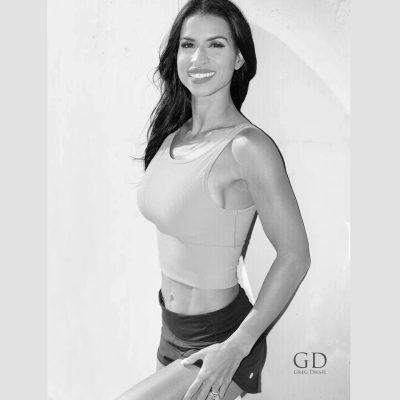
"Sauna. It's the one recovery habit I've kept for years, because it helps my body and my head at the same time."
I use the sauna a few times a week, usually 15 to 20 minutes after training. My muscles loosen up, I sleep better on sauna nights, and honestly it's the only 20 minutes of my day with no phone and no one needing anything from me. For a lot of my clients, especially busy moms, that mental reset matters as much as the physical recovery.
There's real research behind it too. A 2015 study in JAMA Internal Medicine followed more than 2,300 middle-aged men in Finland for about 20 years. The men who used the sauna 4 to 7 times a week had about a 40% lower risk of death from any cause than men who went once a week. It's an observational study, so it doesn't prove the sauna did all of that, but the link with heart health is strong and it has held up in later research.
Is it worth the cost and time? I'd say yes, as long as you treat it as an add-on, not a replacement. Sauna won't fix bad sleep, low protein, or skipped workouts. But if those basics are in place, it's a great way to recover and unwind. You also don't need to buy one. A gym membership with a sauna is how I'd tell most people to start. Hydrate well, skip alcohol before you go, start with 10 minutes, and check with your doctor first if you're pregnant or have a heart condition or low blood pressure.

Lymphatic walking can fit in to almost anyone's day, almost anywhere. You don't need a complicated tracking system, special clothing, fancy red lights, or vibration plate on wheels. Lymphatic walking may be the easiest health habit to add to your day because you already know the mechanics of walking.
As a certified lymph therapist, I describe lymphatic walking as a whole-body experience. Lymphatic walking is walking with a bit more intention. It brings together a natural heel-to-toe step, an easy arm swing, slight rotation through the hips and torso, deep belly breathing, and rhythmic muscle contractions. A comfortable pace for lymphatic walking is a brisk stroll, one where you can talk in short sentences, but aren't completely out of breath.
Lymphatic vessels move fluid with help from your body's muscles, through movement and breathing. Every step gives your muscles another opportunity to help move fluid. Lymphatic walking draws your attention to that rhythm though natural arm swings, comfortable deep breaths, and tall posture.
Unlike the cardiovascular system, the lymphatic system has no single central pump like the heart. It relies on muscle movements to move fluid. A human's body needs to move lymphatic fluid every day, because lymph fluid is our bodies way of moving around immune cells, toxins, and other cellular waste.
The other important part of this walk is relaxation. Slowing down, being intentional with your walk, noticing your surroundings, and relaxing the shoulders. Your body is likely to calm into a parasympathetic nervous system state, or rest and relax. Research supports that a mindful walk may help you feel calmer, while the movement and breathing support proper lymphatic flow. This self-management practice of lymphatic walking is an excellent way to relax, exercise, move lymphatic fluid, and boost overall wellness.
3. Will it detox or eliminate puffiness?
The lymphatic system helps collect excess tissue fluid, proteins, immune cells and cellular waste. The liver, kidneys, lungs, and digestive system perform the body's primary detoxification work. Walking supports circulation and normal fluid exchange, but it does not flush mysterious toxins from the body. A person may feel lighter, more flexible after walking, especially following a desk heavy workday, a long flight, a salty meal, or several hours on the couch. Lymphatic walking is also excellent for GI health and supports the gut to reduce the sensation of abdominal bloating.

The best recovery investment I've ever made cost me absolutely...nothing! The secret? It's protecting 8 hours of sleep. I train for HYROX and play volleyball and pickleball, competitively. I've watched patients spend hundreds on compression boots and ice bath therapy while sleeping five hours a night. Compared to sleep, these types of "recovery tools" actually have lower ROIs. Sleep is the only recovery modality with overwhelming evidence behind it, costs $0, and has no side effects. Sometimes the simplest answers have the most profound effects.
The best recovery investment I've made is not equipment. It's protecting my sleep. I [run / lift weights four times a week], and I spent money on a foam roller and massage gun before realising I was recovering badly simply because I slept six hours with my phone in bed.
What I changed: a fixed bedtime, no screens for the last 30 minutes, a cooler, darker room, and no caffeine after noon. I also take magnesium glycinate in the evening, which helps with night-time cramps. Within a month my soreness after leg days dropped noticeably and my morning runs felt easier.
I'd recommend it because it costs almost nothing, but it takes discipline. That's the real investment.