









10 on the lineup
Protect Sunday To Regain Steady Hands
Not fitness performance for me, work performance. I'm a marketing manager and freelance makeup artist on weekends, so I'm doing a lot of standing, close-up hand work, and screen time. Last summer I hit a wall. I was making stupid mistakes at both jobs, like sending an email to the wrong client and forgetting to bring my primary foundation kit to a wedding trial. Neither is like me.
What I did, dumb simple, I stopped taking Sunday jobs for six weeks. Just protected Sunday as one full recovery day with no alarm and no computer. Not a whole wellness overhaul, one boundary.
The change I noticed by week three was in my hands. Sounds specific but as a MUA, hand steadiness is measurable. I have to draw a wing on someone's eye and I could feel my hand shake slightly by mid-afternoon on tired weeks. On the six-week rest experiment that shake was mostly gone by hour four of a job. My clients also stopped asking if I was okay, which is the polite way of saying I'd been looking rough.
At the marketing job, dumb mistakes dropped noticeably. I wasn't tracking them but my boss's Friday feedback went from "can you double-check the copy in that email" to "nice send."
Honest thing that helped, I stopped treating "protected rest" as lazy. For years I thought a Sunday of doing nothing meant I was falling behind. Turns out that Sunday was letting me be twice as sharp Monday through Friday.
Pause Production To Restore Sensory Precision
At Equipoise Coffee, we believe that balance isn't just a goal for our flavor profiles; it's a requirement for the people behind the roaster. A few years ago, when we were scaling up our small-batch production at our roastery in Harlingen, Texas, I learned this lesson the hard way. We were roasting long hours to keep up with orders for our Mexican La Laja Honey and Colombian Supremo. I was sleeping barely four hours a night, thinking hustle would carry the business forward.
The physical toll was immediate. My sensory palate, which is the most valuable tool I have for identifying roast defects and sweetness, went completely numb. I couldn't distinguish the bright citrus notes of our Ethiopian Yirgacheffe from a standard roast. My decision-making slowed down, and I started making errors with our roasting curves. I realized that operating on empty was actively harming our product quality.
I forced myself to take a weekend of complete rest. I shut down the roaster, slept eight hours a night, and engaged in the same mindful morning rituals we advocate to our customers. The change in my body was night and day. When I returned to the roastery, my focus was incredibly sharp. I could smell the subtle transition phases of the beans again, allowing me to execute the precise temperature adjustments needed to eliminate bitterness.
We've since made rest a core part of how we prioritize work when resources are tight. We openly explain the tradeoff to our customers: we won't rush a roast if it means sacrificing quality. Taking that pause didn't slow us down; it saved our standards. When you're rested, your sensory awareness is locked in, and that's how we keep delivering on our promise of balanced coffee at equipoisecoffee.com.
Prioritize Sleep To Double Creative Output
During a major outreach campaign at The Family Doctor Primary Care in Tucson, Arizona, I hit a wall. We were launching new membership communications for families and small business owners, and I was working long hours trying to explain the tradeoffs of direct primary care versus traditional insurance. I noticed a massive drop in my daily writing speed. My copy was flat, my head ached, and my strategic thinking was slow. I decided to enforce a strict boundary, prioritizing eight hours of sleep and stepping away from my laptop.
The change in my performance was immediate and dramatic. My brain fog lifted, my creativity surged, and I could write copy in half the time with twice the clarity. By prioritizing rest, my physical tension dissipated, and my mental focus returned. I could design better strategies to explain how our members get direct access to the doctor's personal cell number and how we offer house calls.
At our practice, we emphasize patient wellness and preventive health, but we also have to practice what we preach behind the scenes. When resources are tight, prioritizing sleep is not a luxury; it is a strategic necessity. Taking that time to recharge allowed me to communicate our services clearly, from our same-day scheduling to our wholesale-priced labs and generic medication discounts. Proper rest gave me the sharp mental stamina required to build trust through clear communication with our Tucson community. In our marketing operations, a rested mind translates directly to clearer communication. We've proven that rest isn't a sign of weakness; it's the foundation of high performance.
Adopt Set Bedtime To Renew Clarity
Managing the daily operations at RGV Direct Care Family Clinic in Weslaco, Texas, requires sharp focus. A year ago, I fell into the trap of thinking sleep was optional. I was trying to manage clinic workflows, coordinate preventive health screenings, and support our patient relations all on four hours of sleep a night. The results were disastrous. My brain felt foggy, my decision-making slowed down, and I struggled to communicate clearly with our team. My body was constantly tense, and my energy crashed by midday.
I decided to make a radical shift. I committed to a strict seven-hour sleep schedule. The transformation in my performance was night and day. Within a week, my cognitive clarity returned. I noticed I could process complex patient scheduling issues in half the time. My physical stamina rebounded, my morning headaches disappeared, and I felt a renewed sense of patience. I didn't realize how much the sleep deprivation was holding me back until I actually gave my body the time to rebuild and repair overnight.
At our clinic, we blend traditional medicine with holistic practices under the guidance of Dr. Fausto M. Escobedo. We constantly discuss the trade-offs of lifestyle choices with our patients. I now use my own sleep turnaround to help build trust with patients who visit us for chronic disease management or weight loss. When they see that our staff practices what we preach, it makes our health education guidance much more persuasive. Rest is not a luxury; it's the foundation of physical and mental well-being. We've seen firsthand how prioritizing recovery directly impacts metabolic health and stress levels. If you want to perform at your peak, you must prioritize rest just as much as your daily tasks.
Reserve a Sabbath To Revive Voice
Taking a step back to rest is the most productive thing you can do when you are running on empty. We face this challenge regularly at North 7th Street Church of Christ in Harlingen, Texas. When resources are tight and we are coordinating Sunday Morning Worship at 10:30 AM, Sunday Evening Worship at 6:00 PM, and Wednesday Worship at 7:00 PM, it is easy to get caught in a cycle of constant planning. We've learned that prioritizing spiritual and physical rest is the key to delivering our best.
I remember a season where we were preparing for multiple community outreach events alongside our regular Bible-based teaching. I was working late nights, sacrificing sleep, and trying to handle every detail. My voice was strained, my thinking was cloudy, and I was losing my patience. I realized I had to explain the tradeoffs to our team. We decided to prioritize our schedule, delegate tasks, and commit to a day of complete rest before the Sunday services.
The change was immediate and physical. The tension in my shoulders disappeared, my mental clarity returned, and my voice regained its strength. When we gathered at 2205 N. 7th St. for our family-integrated worship, I could engage fully. Our a cappella congregational singing sounded richer to me because I was actually present and energized, not just going through the motions.
Rest isn't a sign of weakness; it's a strategic choice. When we prioritize rest, we build trust through clear communication because we aren't reacting out of exhaustion. If you want to improve your performance, you must protect your downtime. Whether you are leading a team or raising a family in the Rio Grande Valley, giving your body and mind time to recover is what allows you to show up and give your absolute best to the people who rely on you.
Schedule Recovery Days To Raise Power
One of the biggest lessons I've learned as a fitness trainer and founder of a home fitness brand is that recovery is not the opposite of progress — it's a critical part of it.
Earlier in my training journey, I believed that more workouts always meant better results. I was training intensely with minimal recovery days and eventually noticed declining workout performance, lingering soreness, and reduced motivation to train.
After prioritizing proper rest, improving sleep quality, and incorporating scheduled recovery days, I noticed several significant changes. My strength levels improved, my workouts became more productive, and I was able to train with greater intensity and consistency. I also experienced less joint discomfort and faster recovery between sessions.
Perhaps the biggest difference was energy and mental focus. Instead of feeling fatigued heading into workouts, I felt stronger, more motivated, and better prepared to perform at a higher level.
From a physiological standpoint, this makes sense. Muscle repair, hormone regulation, glycogen replenishment, and many recovery processes occur during rest and sleep rather than during the workout itself.
Today, I view recovery as a performance tool rather than time away from training. In my experience, many people underestimate how much quality sleep, hydration, nutrition, and recovery days can influence strength gains, endurance, injury prevention, and long-term consistency.
The specific change I noticed most was simple: I was able to do more work at a higher quality with less fatigue, which ultimately produced better results than training harder without adequate recovery.
Delegate and Unplug To Lead Better
I remember a time when we were preparing to expand our Supervised Independent Living program at the Allen House. We serve youth transitioning out of care in the Rio Grande Valley, and the stakes are incredibly high. I spent weeks working late nights, trying to manage every operational detail. I thought my relentless drive was helping, but my body told a different story. I felt constant tension in my shoulders, my decision-making became sluggish, and I started missing small details in our communication with stakeholders.
That's when I made a conscious choice to prioritize rest. I stepped back, delegated tasks, and committed to a strict sleep schedule. The transformation was immediate. My mind felt sharp, and my patience returned. When you are rested, you don't just react to crises; you anticipate them with clarity. In our work at Sunny Glen Children's Home, building trust is everything. If you're exhausted, you can't show up authentically for the children who need us.
By prioritizing rest, my physical stamina returned and my capacity to lead with empathy doubled. We have served more than 25,000 children since 1936, and that longevity is built on sustainable energy. Rest isn't a reward for finishing your work; it's the foundation that makes high-level performance possible. When I rested, I wasn't just resting for myself; I was resting to ensure our team could deliver the best support possible for the families in San Benito. It completely changed my approach to work, showing me that taking care of yourself is the first step in taking care of others.
Use Pre-Show Calm To Sharpen Sets
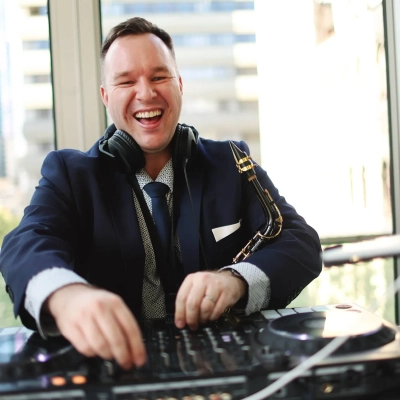
Yes. I use sleep and meditation apps such as Headspace, Calm, BetterSleep and Sleep Cycle to prioritize rest before long wedding receptions. When I focus on rest with those tools, my sets feel noticeably sharper and my energy is steadier late into the night. I physically notice less fatigue and quicker recovery between sets, which helps my timing and crowd reading. That steadiness lets me make better transitions and keep the tempo clients expect.
Treat Shuteye as Strategy for Sound Decisions

One of the biggest lessons I've learned as a founder is that working longer hours rarely produces better results if recovery is neglected. There was a period when I regularly sacrificed sleep to keep up with the demands of growing the business, but I eventually noticed that my decision-making became slower and even routine problems felt more difficult than they actually were. Once I started treating sleep as an essential part of performance instead of something that could be postponed, the quality of my work improved noticeably.
The biggest difference wasn't simply having more energy. I found that I could focus for longer periods, communicate more effectively with my team, and make decisions with greater confidence. Proper rest also made it easier to stay consistent instead of relying on short bursts of productivity, which has proven far more valuable over the long term.
Leverage PEMF and Mat To Hold Focus

When the pandemic shut down my event production business, I finally had to confront how poorly I'd been sleeping for years. I'd been running on adrenaline and treating rest as something to get to later. That's what pulled me into grounding and recovery, and eventually into founding Grooni. The turning point was committing to a real recovery routine: sleeping on a grounding mat and doing a short PEMF session in the evening to wind down.
The specific change was sharper than I expected. Within about two to three weeks I was falling asleep faster and, more importantly, staying asleep instead of waking at 3am with my mind racing. The downstream effect was the real story: my focus held steady through the afternoon instead of crashing, I recovered faster after exercise, and I stopped relying on caffeine to paper over bad nights. The lesson was that performance wasn't about pushing harder, it was about protecting the recovery window so my body could actually repair.